This
is the only room that displays the present-day textile work of male
weavers. Only recently have men begun reviving techniques from their
pre-Columbian past to create tapestries, embroidery, and other various
types of weavings (technically called anillodos). This room
exhibits the first tapestries produced, which are extraordinary in that
they did not arise out of an existing millennial tradition, as did the
techniques and designs of the women, but are a creation of their own
aesthetics and themes.
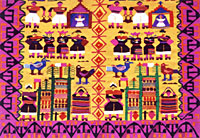
It
is an experience that is still in process, characterized by the
domination of technical skills and the impassioned desire to create a
style they can call their own, that for these tapestry weavers must be
simultaneously characterized by:
- a distinctive representation of their culture, depending on if they are from the Jalq’a or Tarabuco regions, and
- representing a male viewpoint without repeating exactly what the women do.
|
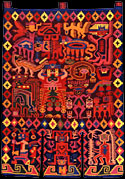 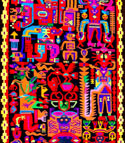
The
men create unique meanings through their distinctive weaving
techniques, which involve tying knots. Women produce figures by
selecting different colored warp threads, while the men with changes in
colored weft fibers.
|