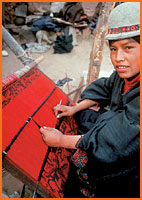
 The
Museum consists of a reception room, 12 exhibition rooms, and a hall
where the weavers work demonstrating for visitors the techniques used
in the creation of their textile designs. The
Museum consists of a reception room, 12 exhibition rooms, and a hall
where the weavers work demonstrating for visitors the techniques used
in the creation of their textile designs.
In Bolivia native
handcrafts are often viewed as second class. One of the principal
objectives of this museum has been, therefore, to promote contemporary
indigenous art, particularly ethnic textiles.
|
The
installation of these exhibition rooms as well as each article on
display along with the accompanying information serve to highlight the
uniqueness of each work, while at the same time provoking an intimacy
between the spectator, the aesthetics, and contents of indigenous
art.
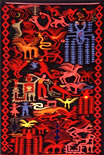
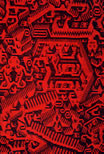
Rooms > |
History of ASUR's Museum
The
Museum of Indigenous Art was concieved as an integral part of the
Indigenous Art Renaissance Program. Initiated by ASUR in 1986, this
program started with the principal objective of revitalizing the
traditional textiles of two cultural groups, the Jalq'a and Tarabuco,
and through their sales the generation of additional resources in
indigenous communities disadvantaged through land erosion and
isolation. Today this program numbers more than 800 associate
female weavers organized in 17 communal workshops as well as 200 male
tapestry weavers and embroiderers reviving pre-Columbian techniques and
organized into 14 male production units. |
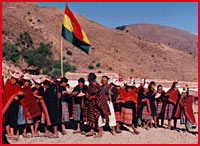
This
museum is a popular tourist attraction that brings together two
cultures, the indigenous and the urban, in an intimate manner.
The information supplied allows the visitor to come closer to an
understanding of the images while exploring their content. |
This Museum…
…reveals
the astonishing and unsettling beauty of Jalq’a and Tarabuco textiles,
the complexity and profundity of the ethnic and cultural creative
thought that brought them to life, as well as the highly technical
quality, also so full of meaning, all combined in a dense web of
expression and content.
It is,
therefore, a testament to those indigenous women artists and artisans
--and now men also-- who have developed and conserved to this day their
own original culture, with roots lost in the depths of their
pre-Columbian past.
The museum is also
a testament to the past and present work of the Indigenous Art
Renaissance Program, processes that have been developed, not solely in
monetary income for each family, not only in providing dignity for the
role of women, but also representing what may be considered a spiritual
movement. The weavers now have at their disposal hundreds of fresh
designs whose constant renewal stimulates their creativity. We
are witnessing a renaissance of indigenous and popular art, as well as
the increased professionalism of its creators. |
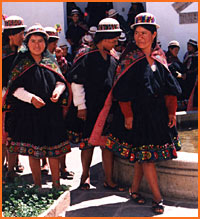
Finally,
this museum is a witness to a process of reflection, a permanent
meditation by the weavers themselves on their art and on their
productive activity, without which there would be no development. We
who guide and accompany this process are also involved in a parallel
reflection, in which the potential of Bolivia’s ethnic and cultural
diversity for the country’s future is constantly present.
Rooms >
|
|