|
ASUR Museum of Indigenous Art
The ASUR Museum of Indigenous Art is one of the most important
achievements of the Foundation. It presents examples of Indigenous Art
that manifest the aesthetic and conceptual quality of archaeological
pieces (weavings and ceramics from 500 to 2000 years ago) as well as
works of contemporary indigenous art (principally weavings from the
Jalq'a and Tarabuco regions) which serve as the museum’s true vocation
and becoming part of the communities own cultural memory.
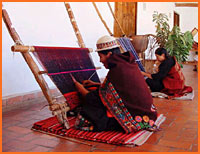
The museum is a great tourist attraction where the permanent
presence of the weavers puts two cultures into contact, the indigenous
and the urban, allowing the spectator to marvel at the creative
potential of the indigenous communities.
Specially designed showrooms present a collection of Tiwanaku
artefacts dating from around 400 AD, the most important find to date
from the southern highlands of Bolivia. This important collection
contains numerous textiles, basketry, bows and arrows, metal and stone
(precious and non-precious), all preserved in extraordinary condition.
|
The music rooms demonstrate the importance of music in Andean
societies over many centuries: music is one of the fundamental
languages that, like their costume and weavings, express the identity
of each group, the way they live and how they think about the world and
society.
This museum, with its 12 rooms, provokes a closeness between
observer and the contents and the aesthetic of the indigenous art on
display.
The museum is, furthermore, the best way to promote the
commercialisation of the products of the 1000 indigenous
artists/artisans participating in the Program.
Museum >
|